








New Hampshire homeowners alleged chemical releases from a plastics plant damaged their wells and property values; a federal appeals court let their pollution-trespass claim continue as a group but narrowed other claims
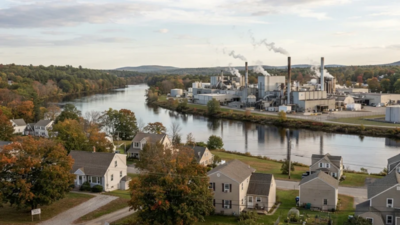
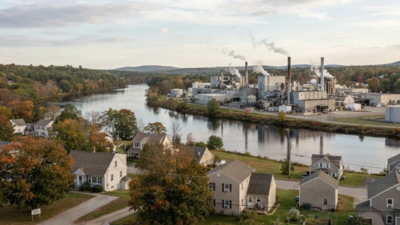
A federal appeals court has allowed a group of New Hampshire homeowners to continue their class-action trespass claim against Saint-Gobain Performance Plastics Corporation over chemical pollution in their drinking water. However, the court overturned class-action approval for two related claims involving negligence and failure to warn. In a ruling issued on 17 November 2026 in Brown v. Saint-Gobain Performance Plastics Corp. (No. 24-1869), the US Court of Appeals for the First Circuit upheld a lower court’s decision allowing homeowners to pursue the company’s responsibility for trespass as a group. But the appeals court rejected group treatment for the negligence and failure-to-warn claims. It found that deciding those claims would require too many separate checks of individual properties.The case involves a manufacturing plant on the left bank of the Merrimack River in Merrimack, New Hampshire. The plant is surrounded by the communities of Bedford, Manchester, Londonderry and Litchfield. Since the 1980s, Saint-Gobain and its previous owner, ChemFab Corporation, have made chemical-resistant and weather-resistant fibreglass and films at the site using perfluorooctanoic acid, known as PFOA. The homeowners, led by named plaintiffs Kevin Brown, Christopher Blundon, Theresa Brown and others, claim that PFOA particles escaped through the plant’s exhaust stacks. They say the wind carried the particles, which then settled on the ground and entered groundwater. They are seeking compensation for falling property values, the cost of replacing drinking water, clean-up expenses and the loss of their ability to use and enjoy their homes.
Contamination discovered in local water supplies
According to the First Circuit’s opinion, written by Circuit Judge William J. Kayatta, the dispute began on 4 March 2016. On that date, the New Hampshire Department of Environmental Services (NHDES) announced that Saint-Gobain had found PFOA in water samples collected from taps inside its Merrimack plant. State officials then worked with Saint-Gobain and the Merrimack Village District Water Works, which supplies water to about 25,000 customers, to test local drinking water. New Hampshire has set its groundwater quality limit for PFOA at 70 parts per trillion (ppt).Tests within the public water district found PFOA levels ranging from undetectable to 141 ppt. Around 45 per cent of the samples recorded levels of at least 20 ppt, while 4 per cent reached or exceeded the state limit of 70 ppt. Tests of private wells near the plant found higher levels. Results ranged from undetectable to 1,600 ppt. About 70 per cent of the samples contained at least 20 ppt, while 34 per cent recorded levels of 70 ppt or higher.Saint-Gobain hired Barr Engineering Company to study past air emissions from the plant. In a report issued in June 2017 and updated in September 2018, Barr found that “air deposition of emitted PFOA from the [Merrimack F]acility may have contributed to the observed PFOA in groundwater in portions of the study area located in close proximity to the [Merrimack F]acility.” The engineering company also identified areas where emissions from the plant could not explain the contamination. It pointed to other possible sources of PFAS in the region. In 2018, Saint-Gobain reached an agreement with the State of New Hampshire through a consent decree. Under the agreement, the company agreed to pay clean-up costs for certain affected properties in Bedford, Litchfield, Manchester and Merrimack. It did not admit wrongdoing or legal responsibility.
Why negligence claims failed the group test
The homeowners first filed their proposed class-action lawsuit in a New Hampshire state court in May 2016. Saint-Gobain later moved the case to the US District Court for the District of New Hampshire. In December 2020, the plaintiffs asked the court to approve a class covering anyone who owned residential property on or after 4 March 2016 and had either a private well within a defined area or a home supplied by the Merrimack Village District Water Works.Earlier in the case, the New Hampshire Supreme Court ruled in 2023 that state law did not allow a separate claim for medical monitoring. Following that decision, the district court removed the medical-monitoring claim. In December 2023, US District Judge Joseph N. Laplante approved a class under Federal Rule of Civil Procedure 23(b)(3). The class covered liability issues involving trespass, negligence and negligent failure to warn. Judge Laplante found that the legal questions shared by the homeowners were more important than the individual calculations needed to decide how much money each person might receive.Saint-Gobain challenged that decision before the First Circuit. The appeals panel included Chief Judge David J. Barron and Circuit Judges William J. Kayatta and Lara E. Montecalvo. The judges disagreed with the lower court’s decision to treat the negligence-related claims as group claims. Under New Hampshire law, a negligence claim requires proof that someone had a legal duty, failed to meet that duty and caused an actual injury through that failure.Judge Kayatta explained that proving whether each homeowner had suffered an actual injury would require separate checks of individual properties. These checks would need to consider “the extent and effect of contamination” at each home. Saint-Gobain’s civil engineer, Dr Michael Mobile, and the homeowners’ experts disagreed over how much PFOA had reached individual properties. They also disputed whether other pollution sources had contributed to the contamination. Because of these disagreements, the appeals court found that individual questions would outweigh the common issues in the negligence and failure-to-warn claims. As a result, those claims could not continue as part of the same class action.
Trespass liability stays on a class-wide track
The appeals court reached a different decision on the homeowners’ trespass claim. The judges noted that Saint-Gobain had not challenged the lower court’s definition of trespass liability in its opening appeal brief. By failing to raise the issue at that stage, the company had given up its right to challenge that part of the decision on appeal.Judge Kayatta explained that the individual property questions raised by Saint-Gobain did not affect the central issue of whether the company was legally responsible for trespass. “In other words, the individualized issues to which Saint-Gobain directs our attention are entirely irrelevant to whether Saint-Gobain is liable for trespass,” Judge Kayatta wrote for the court. “That leaves the issue of damages, which both parties and the district court” recognised would still require separate decisions later in the case.This means the homeowners can continue pursuing the trespass claim together, even though the amount of compensation owed to each property owner will need to be worked out separately. The ruling sends the case back to the federal district court in New Hampshire. The homeowners can continue their class-action case on trespass liability, while individual compensation claims and the negligence-related claims that were not approved for group treatment remain to be addressed.