







Five people never returned from a Titanic expedition in 2023; more than $50 million lawsuit filed by French explorer Paul-Henri Nargeolet’s estate questions OceanGate’s safety decisions and the construction of its doomed submersible | World News
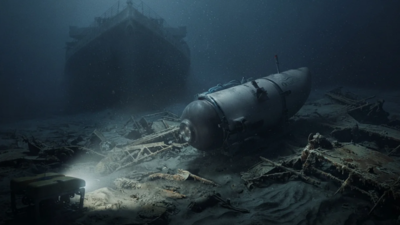
The Titan submersible implosion in June 2023 killed five people during an expedition to the wreckage of the Titanic, raising questions about the vessel’s construction, safety systems and the decisions made before its final voyage. Among those who died was French deep-sea explorer Paul-Henri Nargeolet, who had spent decades visiting the wreck. In August 2024, Richard Ortoli, administrator of Nargeolet’s estate, filed a wrongful-death lawsuit seeking more than $50 million from OceanGate and five other defendants. The complaint accused those involved in designing, building and operating Titan of gross negligence and alleged that safety concerns had not been adequately addressed before its final dive.
French explorer’s estate raises questions over Titan’s construction and safety
The complaint was filed in King County Superior Court in Washington on August 6, 2024. It named OceanGate, the estate of its late chief executive Stockton Rush, former engineering director Tony Nissen and three other companies as defendants. The estate accused them of gross negligence in connection with Titan’s design, construction and operation.The estate alleged that the submersible had been developed and operated outside established practices in the deep-sea diving industry. Particular concerns were raised about its carbon-fibre pressure hull and the use of materials and components that differed from those found in conventional deep-diving vessels.The complaint also questioned Rush’s approach to the project, alleging that his desire to establish himself as an innovator in underwater exploration had taken precedence over accepted safety practices. It claimed that the company had ignored warnings about the vessel and failed to adequately address concerns surrounding its construction.These accusations formed part of the estate’s case and were allegations rather than judicial findings of negligence when the lawsuit was filed. The complaint sought damages exceeding $50 million, including compensation for losses associated with Nargeolet’s death and claims relating to the suffering allegedly experienced before the implosion.
Lawsuit raises questions about passengers’ final moments
One of the more significant allegations concerned what the five occupants may have known before Titan imploded. The estate alleged that Titan’s acoustic monitoring system was capable of detecting unusual cracking sounds from the carbon-fibre hull as the vessel came under extreme pressure. According to the complaint, such sounds could have indicated that the pressure vessel was experiencing structural problems.According to the complaint, the system was designed to identify unusual sounds that could indicate structural problems. The estate argued that such warnings could have alerted the pilot to the developing danger and prompted an attempt to abort the descent.The filing also alleged that the people inside Titan may have realised the vessel was failing before the implosion. It claimed they could have experienced fear and mental anguish during those final moments.However, the suggestion that the passengers knew they were facing imminent death was not established by the investigation. In June 2024, Marine Board of Investigation chairman Captain Jason Neubauer told The New York Times that investigators had found no evidence that the occupants were aware of their impending fate.
Why the lawsuit questioned Titan’s construction
Nargeolet’s estate argued that the explorer had been aware that Titan differed from other submersibles, including its use of carbon fibre in the pressure hull. However, the complaint pointed out that he was not an engineer, physicist or specialist in submersible design. It suggested that he had relied on assurances from Rush about the vessel’s safety and seaworthiness. The estate argued that Nargeolet had not been given a complete understanding of the risks associated with its construction and operation.The complaint also referred to concerns raised by specialists before the final expedition. Questions had been raised about whether the vessel’s design could withstand repeated exposure to the pressures encountered during deep-sea dives. The legal filing alleged that important information about Titan’s limitations and potential safety problems had not been adequately disclosed. It also questioned whether the company had taken appropriate steps to address warnings about the vessel before allowing it to continue operating.
Nargeolet had completed 37 dives to the Titanic wreck
Known as ‘Mr Titanic’, Nargeolet had a long association with the famous shipwreck. He served as director of underwater research at RMS Titanic, the company that holds the salvage rights to the wreck. According to Fortune, his involvement with the site began in 1987, shortly after the Titanic’s location was discovered shortly after the Titanic’s location was discovered. Over the years, he participated in 37 dives to the wreck, becoming one of the most experienced explorers associated with underwater expeditions to the site.His experience was also an important part of the estate’s argument. The complaint suggested that someone with Nargeolet’s background would not have agreed to take part in the expedition had he been fully informed about the alleged problems with Titan. The estate maintained that his familiarity with deep-sea exploration should not be confused with specialist knowledge of pressure-vessel engineering. It argued that he had placed his trust in the assurances provided by the company and its chief executive.
Five people died when Titan imploded in June 2023
The disaster occurred on June 18, 2023, during a descent towards the Titanic wreck in the North Atlantic. The submersible lost contact with its support vessel, prompting a search and rescue operation that continued for several days. The US Coast Guard later confirmed that debris from Titan had been found on the ocean floor, establishing that the vessel had suffered a catastrophic implosion. All five people aboard were killed.Alongside Nargeolet and Rush, those on the expedition included British businessman and adventurer Hamish Harding, Pakistani businessman Shahzada Dawood and his 19-year-old son, Suleman Dawood. The incident brought renewed attention to questions about the safety of privately operated deep-sea submersibles. Titan’s unconventional construction, its testing procedures and the extent of independent scrutiny before its commercial expeditions became subjects of wider concern.OceanGate suspended its exploration and commercial operations following the disaster.
What US and Canadian investigators found about OceanGate’s safety failures
The US Coast Guard’s Marine Board of Investigation released its final report on August 5, 2025, identifying several factors that contributed to the Titan disaster. Investigators concluded that OceanGate’s inadequate design, certification, maintenance and inspection procedures played a significant role in the implosion. The investigation also found that the company had failed to properly investigate and address known anomalies in Titan’s pressure hull following its 2022 expedition. Data collected by the vessel’s real-time monitoring system should have been analysed and acted upon, but OceanGate failed to take appropriate action.In October 2025, the National Transportation Safety Board published its own findings, identifying OceanGate’s inadequate engineering process as the probable cause of the implosion. Investigators concluded that the company had failed to establish the actual strength and durability of Titan’s pressure vessel. The report also identified delamination damage in the carbon-fibre structure, which was worsened by additional damage and eventually led to a local buckling failure.Canada’s Transportation Safety Board also published its final investigation report on June 17, 2026. Its findings highlighted deficiencies in OceanGate’s risk management and the testing of Titan’s acoustic monitoring system, alongside gaps in the oversight of privately operated submersibles.
Lawsuit filed by Nargeolet’s estate
The lawsuit also underwent a procedural change in January 2025, when a federal judge ordered the case to be returned to King County Superior Court in Washington. The decision addressed where the proceedings should take place and did not determine whether the defendants were liable for Nargeolet’s death. Nargeolet’s lawyers said the case was intended to establish how the disaster occurred, who was involved and whether those responsible had allowed Titan to operate despite potential safety concerns. Attorney Tony Buzbee said the family wanted answers about the circumstances surrounding the implosion. An OceanGate spokesperson declined to comment on the lawsuit, according to Associated Press.