






Donald Trump loses US Congress; Netanyahu faces deadlock at home: What happens to Iran war now?
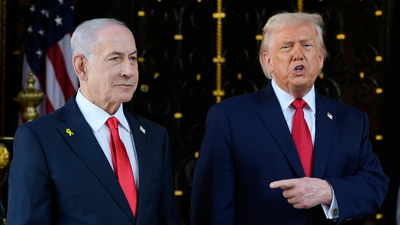
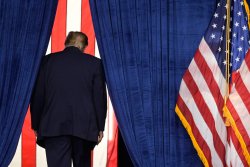
Two elections, two political setbacks and one unresolved war. US President Donald Trump has lost control of Congress after voters handed Democrats a sweeping victory in US midterms, while Israeli Prime Minister Benjamin Netanyahu is struggling to secure a parliamentary majority following Israel’s October 27 elections. Both leaders, who joined forces in the war against Iran, now face growing pressure at home even as the conflict they launched remains unresolved.Months after the killing of Iran’s Supreme Leader Ayatollah Ali Khamenei, the war has neither delivered a decisive outcome nor brought Washington and Tehran closer to a lasting settlement. With Trump’s Republicans losing both chambers of Congress and Netanyahu’s bloc falling short of a majority in the Knesset, the political landscape has changed for both leaders.The timing is significant. US strikes on Iranian targets near the Strait of Hormuz came just hours before Americans voted, amid continuing exchanges of proposals between Washington and Tehran. They also followed reports that Netanyahu had pressed Trump to consider another round of military action.With both leaders facing pressure at home, where does the Trump-Bibi partnership go from here? Will the political setbacks push them towards a deal with Iran, or make them more inclined to take a harder line?
Trump’s midterm setback: Democrats take control of Congress
The November 3 midterm elections delivered a major blow to Trump, with Democrats winning control of both the House of Representatives and the Senate. The Associated Press reported that Democrats flipped at least seven Senate seats, including in Kansas, Iowa, Texas, Ohio, Maine, North Carolina and South Carolina. They also gained more than two dozen House districts, including in areas that had backed Trump by double-digit margins in 2024.
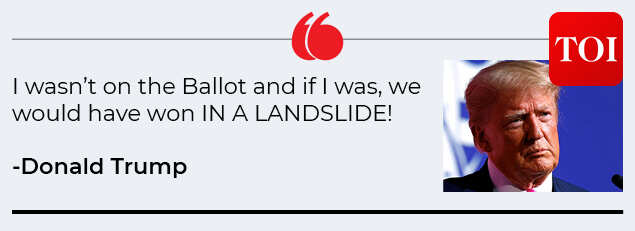
Trump claims he would have won in a landslide
Trump brushed aside suggestions that the result was a personal setback, pointing out that he was not on the ballot. “I wasn’t on the Ballot and if I was, we would have won IN A LANDSLIDE!” he said.He later congratulated Democrats but maintained that the result was not a referendum on him. “The Democrats did a good job. They fought hard,” he told Fox News. “I don’t view it as a hit on me,” he added, claiming that the country had seen “the greatest two years in the history of the presidency”.
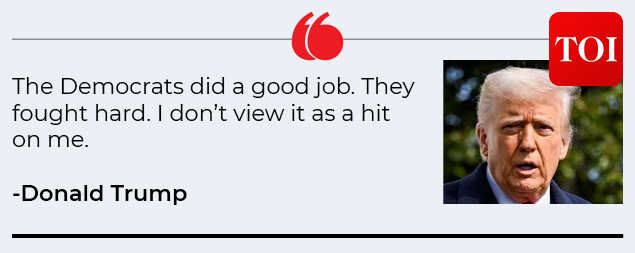
Trump on Democrats’ midterm performance
The Senate results included a series of Democratic victories in traditionally Republican states. James Talarico defeated Ken Paxton in Texas, becoming the first Democrat to win a Senate election in the state since 1988. Annie Andrews defeated Darline Graham in South Carolina, while Adam Hamilton unseated incumbent Roger Marshall in Kansas, ending a 94-year gap since the state last elected a Democrat to the Senate.Democrat Josh Turek defeated Republican Ashley Hinson in Iowa, former Ohio senator Sherrod Brown beat incumbent Jon Husted, and former North Carolina governor Roy Cooper won the open Senate seat against Michael Whatley. Democrats also held on to seats in Georgia, where Jon Ossoff won re-election, and New Hampshire, where Chris Pappas defeated former senator John Sununu.Talarico celebrated his Texas victory by telling supporters: “We just took back Texas.” He added: “We are tired of being told to hate each other. We didn’t win this race by alienating our neighbors or shaming our neighbors.”The gubernatorial results also brought gains for Democrats. Keisha Lance Bottoms won in Georgia, becoming the first Black woman elected governor in the US. Amy Acton defeated Trump-backed Vivek Ramaswamy in Ohio, Rob Sand won in Iowa and Gina Hinojosa defeated Republican incumbent Greg Abbott in Texas, becoming the state’s first Latina governor. Democrats also won Nevada, where Aaron Ford defeated incumbent Joe Lombardo.There were notable results for Indian-American candidates as well. Democrat Suhas Subramanyam retained his Virginia House seat, while Pia Dandiya won Florida’s 22nd Congressional District. Maryland lieutenant governor Aruna Miller also won another term alongside governor Wes Moore.The new Congress will take office in January. Democrats will have greater powers to scrutinise the administration, hold hearings, investigate Trump’s actions and block or delay presidential nominees. House Democratic leader Hakeem Jeffries is also poised to become the first Black speaker of the House, subject to a vote by lawmakers.The change could complicate Trump’s domestic agenda and increase scrutiny of the Iran war. However, a Democratic-controlled Congress cannot automatically end the conflict or take military command away from the president. Trump remains commander-in-chief, while Congress can use its oversight and funding powers to exert pressure.JNU professor Rajan Kumar told TOI that the new Congress could act as a check on Trump’s approach towards Iran. “He’ll be balanced by the new Congress where the Democrats would be dominant. So that will play some role,” he said, adding that the president would face challenges in securing congressional approval for funding a prolonged war.
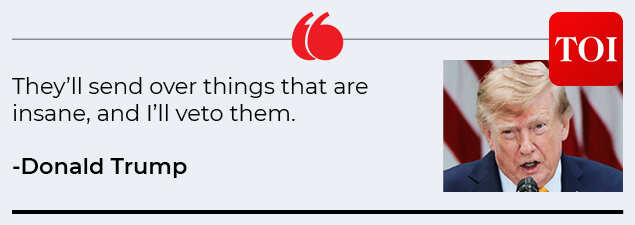
Trump on vetoing Democratic proposals
Trump has warned that he would veto legislation he considers unacceptable. “They’ll send over things that are insane, and I’ll veto them,” he said. He also left open the possibility of working with Democrats, suggesting that after a few months of vetoes, lawmakers would ask how to get things done and “we’ll work together”.
Did the Iran war cost Trump at the ballot box?
The election results suggest that the Iran war was one part of wider voter dissatisfaction with the administration, rather than the only reason Republicans lost control of Congress.Reuters reported that nearly nine in 10 voters identified the cost of living as a crucial or major factor in their vote, according to exit polls. Three-quarters were angry or dissatisfied with the direction of the country, while nearly two-thirds blamed Trump for high prices.The AP Voter Poll, which surveyed about 80,000 voters across the country, found that about six in 10 disapproved of Trump’s handling of the presidency. Around seven in 10 said Congress was not doing enough to check presidential power.The Iran conflict also featured in voters’ concerns. The AP poll found that about six in 10 voters considered the US decision to take military action against Iran the wrong one, while around a third said the war was a crucial factor in their vote.
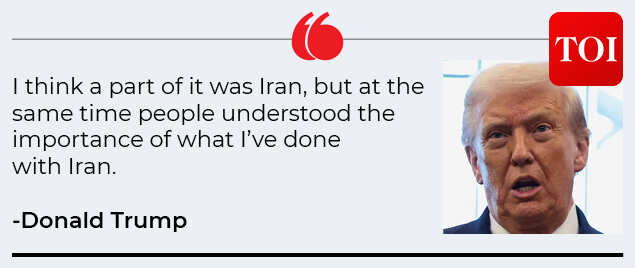
Trump says Iran partly influenced midterm results
Trump acknowledged that Iran played a part in the Republican losses, but did not indicate that he regretted the military campaign.“I think a part of it was Iran, but at the same time people understood the importance of what I’ve done with Iran,” he told Fox News.He also defended the decision to use force, saying: “I did the right thing. I would have done it again.”Kumar told TOI that the Iran conflict had added to the wider dissatisfaction with the Trump administration, particularly because it had failed to deliver a decisive outcome.“On the issue of Iran, first, he could not achieve any military or political breakthrough. The United States got caught in a quagmire kind of situation where it’s a deadlock and he can neither win nor withdraw,” he said.Kumar also pointed to the economic consequences of the conflict, saying the rise in diesel and fuel prices had contributed to the pressure on American households. He said domestic inflation remained a major concern, even though the US economy itself was not doing badly.He added that Trump had promised not to intervene in international conflicts but had acted contrary to that commitment in Venezuela and Iran, among other places.
Strikes near Hormuz: Is Trump preparing for another round?
Even as election results came in, the military situation remained unsettled.The Associated Press reported that the US carried out limited strikes on Iranian targets near the Strait of Hormuz on November 2, hours before Americans voted. Iranian state media reported explosions on Qeshm and Hengam islands and near Bandar Abbas.A US official told the AP that the strikes targeted Iranian forces using surface-to-air missiles against US assets in the strait. The official spoke on condition of anonymity because they were not authorised to comment publicly.Reuters reported that US officials described the strikes as defensive and said they did not amount to a return to major combat operations. Trump later described the action as a “minor attack” and said it “wasn’t war”.He also explained the target of the operation, saying: “They built an anti-aircraft facility. It took them about two months. We watched it get built. As soon as it was completed, we hit it last night.”The strikes came amid uncertainty over whether Trump would order a fresh campaign after the midterms. The administration has maintained a naval blockade around Iranian ports, while thousands of US troops remain in the region. The AP has also reported that another aircraft carrier and additional troops are heading towards the Middle East.Diplomatic contacts have continued alongside the military build-up.Reuters reported on November 3, citing a senior Iranian official, that Washington and Tehran remained far from reaching an agreement despite intensified efforts by mediators. Qatari officials have been involved in passing proposals between the two sides.Iran has said it is prepared to discuss its nuclear programme but wants the US to lift its naval blockade and ease sanctions on its oil sales. Tehran has also sought a ceasefire that includes Lebanon. It has maintained that the Strait of Hormuz cannot be fully reopened without its conditions being addressed.Iranian Parliament Speaker Mohammad Bagher Qalibaf said Washington had the responsibility to prevent a return to war. “The ball is now in America’s court to prevent war,” he said. He warned that Iran’s armed forces remained on high defensive readiness and that any further US “strategic miscalculation” would face a response on a “new battlefield”.
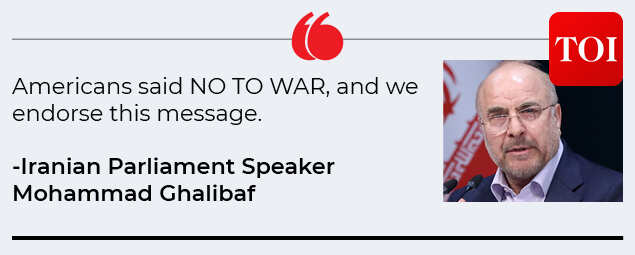
Ghalibaf slams Trump after GOP setback
Qalibaf later posted: “Americans said NO TO WAR, and we endorse this message.” He warned that if the US government betrayed public will, it would learn that Iran’s “NO comes with a Nightmare”.The gap between the two sides remains wide. Washington wants a settlement addressing Iran’s actions in the strait and its nuclear programme, while Tehran is seeking relief from the blockade and sanctions before broader negotiations.Vice-President JD Vance has expressed optimism about a negotiated settlement. “Both feel pretty good about the prospects for potentially coming to a negotiated settlement,” he said.
Netanyahu’s Israel election setback: 53 seats, but no majority
The October 27 election in Israel has left Netanyahu with a difficult task: finding a path to a parliamentary majority.The final results gave the bloc aligned with Netanyahu 53 seats in the 120-member Knesset. The opposition bloc led by Gadi Eisenkot won 48, while Arab-led parties secured 19 seats, according to the final tally reported by The Times of Israel.Neither of the two main blocs has the 61 seats required to form a government. Netanyahu’s Likud remained the single largest party with 27 seats, while Eisenkot’s Yashar won 21. The 19 seats secured by Arab-led parties marked a record for them in an Israeli election.
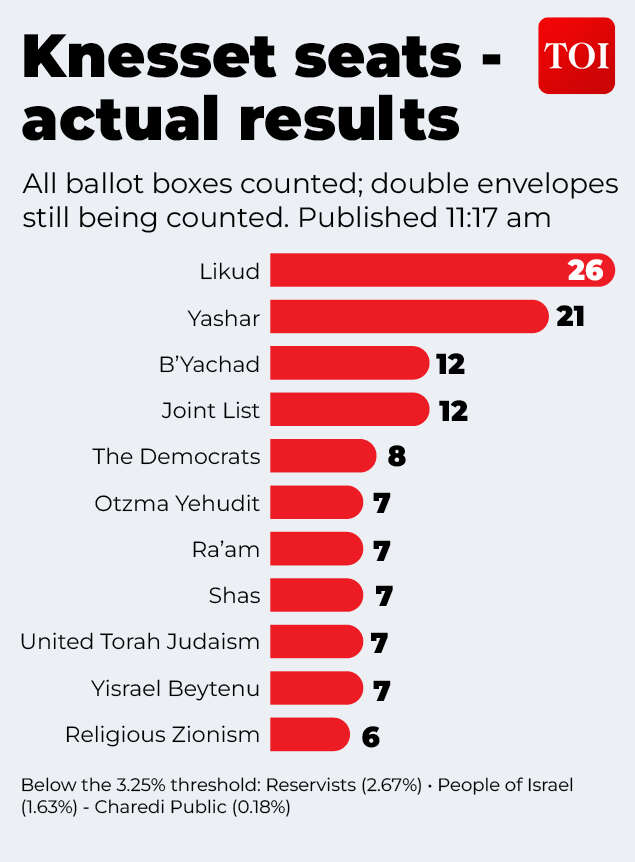
Knesset numbers after Israel elections
The Congressional Research Service, in its October 30 report on the election and government formation, noted that both major blocs had fallen short of a majority and highlighted the potential role of Arab-led parties in determining who could form the next government.Netanyahu could try to bring more parties into his existing alliance or seek a broader arrangement. The opposition is attempting to build an alternative around Eisenkot but faces divisions over whether and how to work with Arab-led parties.Netanyahu has not automatically lost office. He remains prime minister while the government formation process moves ahead. Israeli President Isaac Herzog is expected to consult political parties before asking a candidate to form a coalition. Negotiations could be difficult, particularly because the opposition does not have a clear route to 61 seats either.
Election fraud allegations complicate Netanyahu’s coalition battle
The election has also been followed by allegations of irregularities, with Netanyahu’s Likud questioning aspects of the result and raising claims involving Arab-led parties.“The elections in the State of Israel were stolen by Arab parties that support terrorism and the elimination of the Jewish state through serious criminal offences of bribery, threats, violence, forgeries, and the use of prohibited software to mobilize voters,” Netanyahu said after election setback.
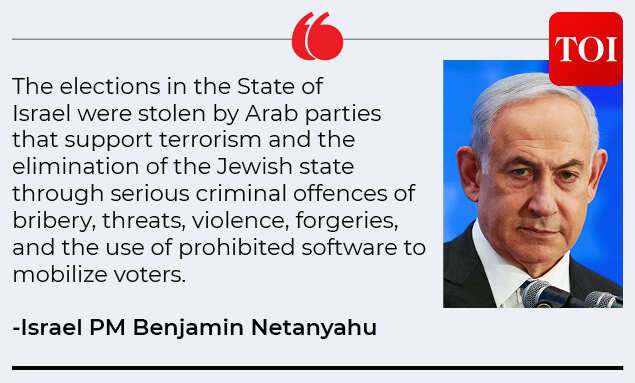
Netanyahu alleges Israeli elections stolen by Arab parties
The opposition has rejected the allegations. Eisenkot accused Netanyahu of an “orchestrated and organised campaign to delegitimise the results”. He also described him as a “caretaker prime minister, without a mandate and without public confidence”.Netanyahu was also rebuked by President Isaac Herzog for “tarnishing an entire community”.The Jerusalem Post reported that the Israeli election commission rejected efforts to delay certification of the results over claims of interference. Israeli authorities have examined the allegations, but they have not established evidence of systematic fraud that would alter the final tally.The dispute matters because the next stage will test whether parties that have spent years divided over Netanyahu can agree on an alternative. Some opposition leaders have backed Eisenkot, but cooperation with Arab-led parties remains contentious. Avigdor Lieberman, among others, has ruled out such a partnership.
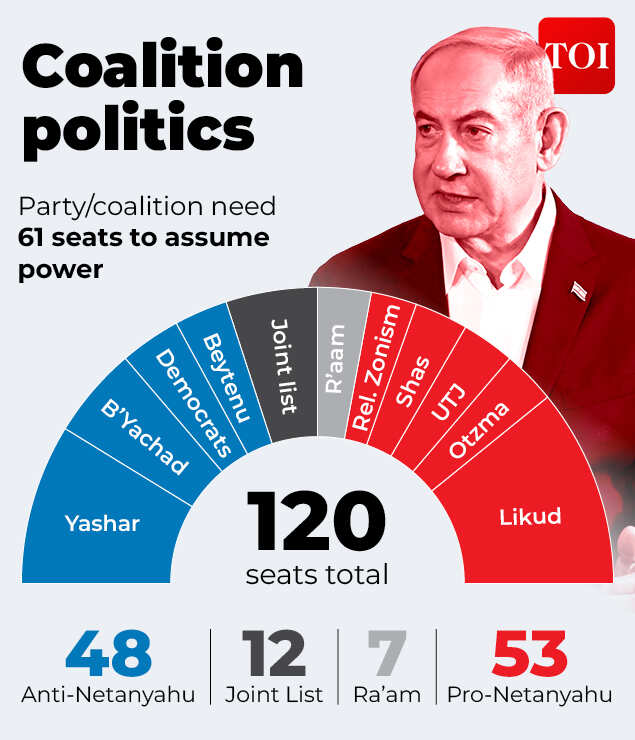
Coalition possibility for Netanyahu
The possibility of another election cannot be ruled out if coalition talks fail. For now, however, Netanyahu has time to negotiate and remains in office.
Did Netanyahu push Trump to resume strikes on Iran after the midterms?
The Israeli election has also raised questions about whether Netanyahu could seek a renewed military campaign against Iran as he tries to navigate the political deadlock.The Associated Press reported on November 2, citing two regional officials and another person familiar with the matter, that Netanyahu had pressed Trump to launch another wave of strikes after the US midterm elections. One of the officials said Netanyahu was working with senior US administration figures to persuade Trump to approve a quick but extensive air campaign.The AP report also said Trump had not committed to military action during a weekend call with Netanyahu. The White House did not directly respond to questions about the discussion, while the Israeli government did not immediately comment.The report does not establish that Netanyahu’s political position was the reason for seeking further strikes. The possibility that renewed conflict could help him build an emergency government has been raised in reporting and political discussion, but remains an interpretation, not an established motive.There is also a regional cost to escalation. The AP cited concerns among US allies in the Middle East that fresh attacks could destabilise the region further, draw in Iran-aligned groups and put shipping routes under greater pressure.For Netanyahu, a renewed confrontation could reinforce the security argument central to his politics. But it could also expose Israel to further retaliation and make the formation of a stable government more difficult.Kumar told TOI that Netanyahu’s approach had also contributed to Trump’s political difficulties.“He got kind of persuaded by Netanyahu’s dream, where he thought that he can fix the Iran issue forever. But in the process, he got the US involved,” he said.Kumar added that Trump’s support for Netanyahu during the Israeli election had generated resentment among some opposition supporters. “Instead of pursuing a policy of neutrality, in Israel also he played a politics where he endorsed the candidacy of Netanyahu,” he said.
Two political setbacks, one Iran war: What happens next?
The political consequences of the two elections are different, but they could affect the same conflict.Trump will have to deal with a Congress controlled by Democrats from January, while Netanyahu needs to find a way to form a government. Both have reasons to show that they remain in control of events, but neither has a free hand.For Trump, the election result makes it harder to sustain a war without facing questions from Congress and voters. Democrats can investigate the administration’s decisions, demand information on the cost and objectives of the campaign and use hearings to keep the issue in the public eye. They cannot, simply by winning the midterms, order the president to end military operations.For Netanyahu, the immediate challenge is domestic. His bloc has 53 seats, and the opposition is trying to organise around Eisenkot. A broader security crisis could change the political debate, but it would also carry risks for Israel and its regional relationships. There is no certainty that another round of strikes would help Netanyahu secure a majority.Kumar said the direction of the conflict would depend partly on how Israeli politics unfolded in the coming weeks. He also cautioned that Trump could still pursue a coercive approach towards Iran, even as the new Congress seeks to limit his options.“Trump being Trump is very unpredictable,” Kumar told TOI. “His policy has backfired domestically as well as in terms of foreign policy.”The president’s own statements suggest that Trump is still weighing both military and diplomatic options. His decision to describe the latest strikes as limited, while continuing to defend the wider campaign, leaves room for further action as well as negotiations.The immediate test will be whether the US and Iran can turn the proposals being exchanged through Qatar into an agreement addressing the blockade, shipping through Hormuz and the wider conflict. If they fail, military pressure could rise again.For Netanyahu, the next few weeks will be dominated by coalition arithmetic. For Trump, they will be about what the war has achieved, what it is costing and how much political support remains for continuing it.The elections have not ended the Iran war. They have, however, made it harder for both leaders to ignore the domestic consequences of what happens next.