

Moshe Rosenthal on Directing Queer Oscar Contender ‘Tell Me Everything’
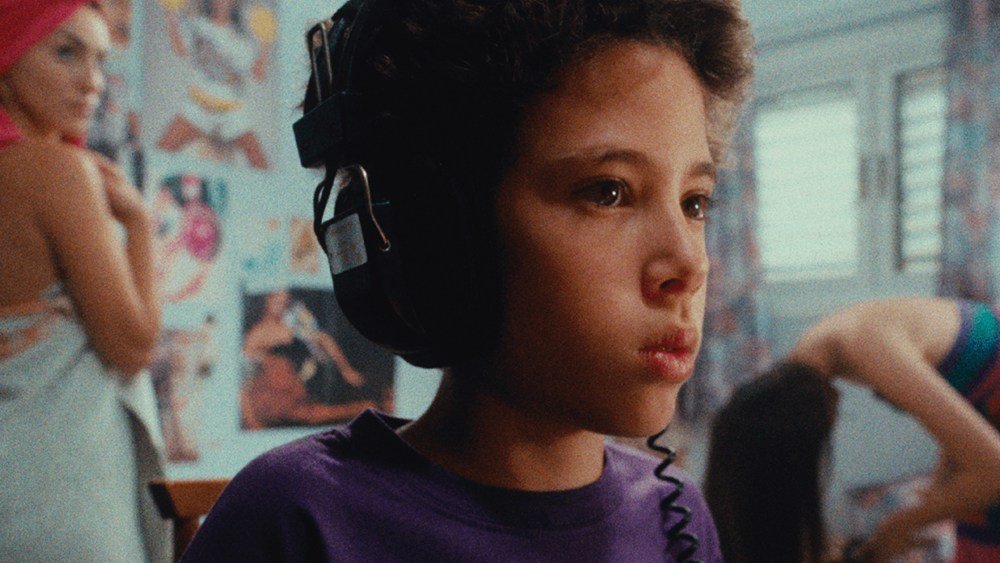
Moshe Rosenthal’s “Tell Me Everything” is the story of a father-son relationship fractured by an uncomfortable secret. Set in the late 1980s and early 1990s in Holon, a city in western Israel, it grapples with queerness, masculinity and family just as 12 year-old Boaz is preparing for his Bar Mitzvah.
Like all Rosenthal’s work, “Tell Me Everything” (his sophomore effort after “Karaoke”) reflects different facets of his identity. “I don’t want to let it control the story but it’s just there in a way that feels organic and feels honest,” he says, noting there are parallels between his own internal struggles and that of his characters.
The film, which debuted at Sundance earlier this year, is now set to represent Israel at the Oscars after winning the country’s top film prize at the Ophir Awards (it also broke the record for number of nominations, notching up 16 nods). Despite the reception, last month it was dropped from Swiss film festival Everybody’s Perfect because Rosenthal, who hails from a Turkish and Egyptian background, is Israeli. (After threats of a boycott, Everybody’s Perfect canceled two screenings despite a rep for the festival calling the work “a beautiful film about the ’80s and AIDS/HIV.”)
Rosenthal sat down with Variety to discuss the inception of “Tell Me Everything,” its reception and what it is like to be a queer filmmaker from Israel at this moment.
When did you write the film?
I actually wrote it at the same time that I wrote my previous film “Karaoke,” and it was one of those things that you feel “It’s too big to be a first feature.”
I kept developing it for about eight years and it was an interesting process because, in a way — and it happens with every film — you grow up during the writing process, and the world is shifting. So with “Tell Me Everything” it felt even more important the more I worked on it, and especially when we got to a place when we were filming it. It was right during the [Hamas-Israel] war, so for us it was almost important to tell a very personal and humanistic story because there was so much hate around us. So weirdly enough, it made us very, I don’t know — believe in that art.
How long was the shoot?
Oh, not too long. It’s it was 18 days. It was January 2025.
Yair Mazor, who plays young Boaz, carries much of the film. How old was he in real life when you filmed?
He was 12. My casting agent [Chamutal Zerem] showed me a picture of him and she was like, “We should see him, he reminds me of you.” It takes me time to realize I’m making a film about myself so at that moment I was like, “What has that got to do with anything?”
And then I felt the responsibility of the filmmaker who meets hundreds of kids until he finds his “Elliott” [from “E.T.”] and we saw a bunch of them and we got back to the first one because we knew he was special. And I think [Zerem] was right not only because he might have reminded her of me but also because he had the spirit of a director, the excitement of a film lover and a person that really wants to make great movies. That’s what really connected us.
There are a lot of heavy themes in the film. How protected was he on set?
In many ways I was overly protective of him and he gave me a few times permission to be like, “I understand,” but obviously there was a lot of things, especially on set. Welfare [officers] were always there, they didn’t allow him to do a few things that I wanted. You’re not allowed to let him smoke and there was a scene where he was holding a cigarette — that scene was deleted. His movie parents and his movie sisters were also very protective.
And how did you cast Assi Cohen as Boaz’s father Meir?
He’s the biggest comedian [in Israel], huge. He didn’t do films for 15 years… it’s a combination of a comedic genius like Eddie Murphy with a Howard Hughes type of personality. He doesn’t go to any parties, he doesn’t go to any premieres, he doesn’t go to any awards. He’s very shy. Just somebody who never takes any offers when you send him a script. We sent him the script because it was one of those jokes that filmmakers do. They send him a script so he will return it because they always hope there might be a chance he’d do something, but it never happens.
Me and [Zerem], in our first meeting she was like, “Let’s send it just for the sake of it [and] continue looking for somebody else” and we didn’t even think about it but he immediately said yes. He saw “Karaoke” a few weeks before and he was just waiting for that call.
Why did you feel he’d be right for the part?
He’s such an amazing comedian. All he does is change his masks, so when you take all the masks [away] and you see him “naked” it’s like he’s out of focus, it’s so strange. And I felt that notion, especially for a local audience that knows him very well, could be part of that feeling, of like, “He’s so close but I don’t understand, I need him to just show me.” And that’s what we tried to do in the last scene when the two are actually communicating for the first time.
“Tell Me Everything” scored the most nominations in the history of the Ophir awards (voted on by the Israeli academy) and will represent Israel at the Oscars. How are you feeling?
It’s pretty incredible… I think I was surprised of how profound and deep the connection of the audience is to the film.
Sometimes certain films and certain type of filmmaking – and I think hopefully we’ve done it here — just open a door in your heart for your own memories, and that’s something that is very beautiful to see. And specifically in Israel, I think it made people just remember that they have an identity and culture and a lot of things that in the last few years it’s almost like we learned to put aside because we kept dealing with [geopolitical] conflicts.
Last month, the film was dropped from the Swiss LGBTQ+ film festival Everybody’s Perfect after they were threatened with a boycott. What is it like to be an Israeli filmmaker at the moment?
I mean, it’s complicated. On the one hand, I don’t even think that it’s only Israeli filmmakers. I think that filmmakers in general are, in a way, being forced to politicize their work, so I think it’s even a bigger issue.
What I find most important, what I think I do best in a way, it’s the humanistic stories that demand the viewer to not politicize it and to try to just remind people what art is supposed to be. It’s supposed to create those bridges. It’s supposed to allow us to have empathy for each other, and that’s also part of the themes of this film. That’s also what I’m trying to do with my characters.
The film deals with the consequences of shutting somebody out of your life because of [someone’s identity, in this case] his sexual orientation. The consequences are terrible for both sides… The film is called “Tell Me Everything.” The climax of the film is a father and son just communicating, that’s it. And the ability to accept and to process, there are no easy solutions.
After the deplatforming was made public, did you either hear from the festival or from other filmmakers?
Yeah, I mean, I got a lot of support from other filmmakers.
But I didn’t hear from the festival directly. I just read [about] their reaction. I wasn’t upset as much that as I was just sad about it, and not about not being in the festival, but the fact that this is the situation. The fact that even the festival admits that [it] was bullied to not have the film, it’s not even a conversation. It’s just they’re afraid. [Last month a representative for Everybody’s Perfect told Variety the film had been deprogrammed with a “heavy heart” because “when people mention boycotting a festival that is a very big threat.”]
And that’s what saddens me, because it made me realize that they were actually one of those who took the film, who weren’t afraid at the beginning, and took the risk, and obviously the moment that they were bullied out of their choice, I felt actually sorry for European festivals and the fact that that’s the situation that we live in because I really think that it starts with one thing and it will evolve eventually. Censoring artists is not a solution for anything, and I think history proves that.
This interview is made up of two conversations, which have been edited and condensed.