









Sometimes, succeeding in high school takes longer than four years
Every summer, approximately 87% of American high school seniors graduate four years after they started ninth grade. That leaves about 500,000 students nationwide who don’t complete high school with their cohort each year. But why do these half a million students not graduate in four years? The data show that many of them face family, language, and learning challenges that are beyond their control. If the four-year graduation rate is the standard accountability metric set by the No Child Left Behind Act of 2001 and reinforced by the Every Student Succeeds Act, then these students and the schools that serve them are considered failing.
Based on my decades of experience as a superintendent, I believe the four-year graduation rate is the wrong measure of success for many of our students. I think in particular of one student named Anthony, a 6’3’’ junior who, despite being a leader in one of the neighborhood gangs, never missed a day of school. Anthony always participated in class discussions and always stayed engaged, especially in world history, which he loved. Then one day a teacher asked him to read a passage to support a point he had just made. Anthony answered with a profanity that he knew would get him thrown out of class. When I went to see what had happened, he was crying as he admitted, “I can’t read.”
Anthony is not an isolated case. Students’ foundational skill gaps in literacy and math that originate in early grades can go unnoticed because, like Anthony, they learn to compensate. I’ve seen students who are raising children or whose home lives are so unstable that they changed schools 11 or 12 times in a single year. These students don’t deserve a scarlet letter for the circumstances they’ve faced that made education substantially harder. Instead, they deserve a pathway to graduation that is flexible enough to accommodate the challenges they’re facing, and offers them the personalized support they need to earn a high school diploma — even if it’s not within the standard four-year timeline.
This is where alternative high schools come into play. Alternative school students typically need five to eight years to complete their credentials, yet traditional accountability systems aren’t designed to acknowledge that pathway. Some states have created new frameworks that reflect the reality of these students’ lives. Ohio, for example, has a Dropout Prevention and Recovery report card that measures fifth- through eighth-year graduation rates and uses a value-added model to recognize academic growth.
These policy changes reflect a broader shift toward recognizing that students who take a nontraditional path to graduation need nontraditional supports, too. The alternative schools that serve these students deserve accountability frameworks that capture the academic growth of some of the nation’s most vulnerable students. Programs like Acceleration Academies partner with school districts to help students who have left school reengage in a flexible school model, complete their coursework, and earn their diplomas.
“Partner” is the key word here. The model I’ve seen working is a collaboration between a school district and a contracted alternative education provider, with a shared goal of keeping students connected to their graduation pathway. Students remain on their school district’s roster until they graduate, so the funding follows them. This strategic partnership encourages districts to refer students to the program who might otherwise slip through the cracks.
Engaging and supporting students who may have been away from school for years requires rethinking not just the time it takes to graduate, but how students spend their time learning. Many students are working during the day to support their families, so flexible scheduling that includes nights and summers is essential.
Even when they see that school can fit into their schedule alongside their other obligations, many students still feel shame about gaps in their learning. Getting them back on track toward a diploma starts with assessing their skills without traumatizing or embarrassing them.
Equally important is realizing that showing how much work students still have ahead of them may discourage them from even trying. One way to keep them from feeling like they’re in a black hole they can’t escape is to have students take one class at a time, working intensively for four weeks rather than trying to tackle a full semester or trimester. A single-class model frees students to focus on mastering the skills they need for that class only, without the worry or distraction of juggling multiple classes. It also gives students who haven’t experienced much academic success the opportunity to build their confidence.
Making this model work requires teachers who are flexible and patient, and who believe in their students’ ability to learn, no matter what the time frame. And when students miss a day (or more), they don’t chalk it up to chronic absenteeism. I’ve seen teachers call or text their students to gently ask where they’ve been and if they need help. Those teachers aren’t aiming to keep absenteeism numbers low. They’re showing their investment in an individual student by checking in to ask, “Are you okay?”
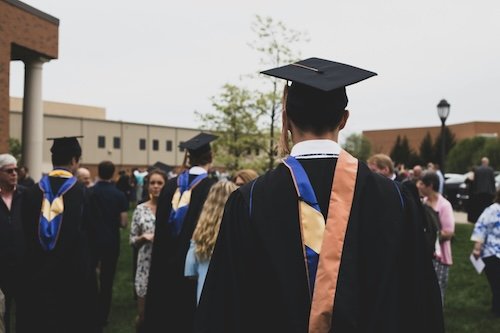
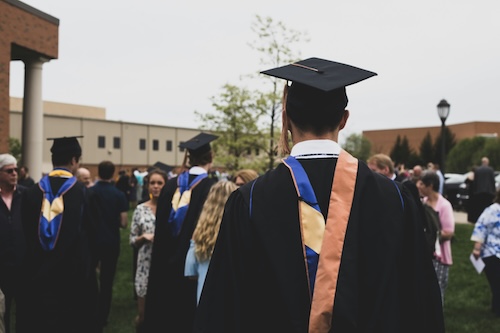
I recently attended a graduation for one of the programs I consider a model in DeKalb County, Georgia. It was the most beautiful thing I believe I’ve ever seen. Teachers recognized students for their talents as well as their perseverance and resilience, regardless of their life circumstances. One teacher told a student who was graduating despite an initial lack of confidence, “You didn’t have me as your teacher yet. You didn’t know what you could accomplish.”
Some graduates had earned college scholarships. Others had apprenticeships lined up. In the audience, along with teachers, parents, and friends, were several central office representatives from DeKalb County School District, who were applauding these students for graduating.
For students like these and so many I’ve seen over the years, success is much broader than finishing high school in four years. If students earn their diplomas in six or even eight years and go on to have a rewarding career, I’d call that a success. Rather than considering the 500,000 students each year who don’t graduate another lamentable statistic, educators can start building relationships with their students by saying, “Let’s start where you are and see what we can do. Together.”